

MAINTAINING GOOD PERSONAL HYGIENE PRACTICES 
Teacher: Juana Simón Tamayo
SUBJECT: Quality management and food safety and hygiene
UNIT:Maintaining good personal hygiene practices
COURSE/ LEVEL: : 1º Kitchen Direction
Observations:Students are trained to teach classes in L2 (English)
Objectives
Verify good hygienic practices by evaluating the dangers associated with poor hygiene habits.
a) The mandatory hygienic-sanitary standards related to hygienic and handling practices have been recognized.
b) Health hazards have been identified, as well as the main risks and poisoning associated with bad habits.
d) Personal hygiene measures associated with food handling have been identified to avoid health problems for consumers.
e) All behaviors or aptitudes likely to produce contamination or alteration in food have been recognized.
f) The diseases that must be declared have been listed, in turn identifying allergies and food intolerances.
g) Procedures for action against food alerts have been recognized
h) Full work clothing and cleanliness requirements have been recognized.
i) The means of protection from cuts, burns or injuries of the manipulator have been identified
Contents
Good personal hygiene practices
– Body hygiene
– Hand washing and protection
– Hair hygiene and protection
– Work uniform
– Adoption of proper habits
– Protection from wounds or injuries
– The declaration of known diseases
Food handling training
– The food handling training plan
– Training plan documentation
3. Language Content / Communication
VOCABULARY
Nouns:
Cleanliness
Hygiene
Habits
Health
Pollution
Disease
Symptom
Diarrhea
Documents
Training Plans
Foodstuff
Uniforms
Injury
Hair
Hat
Hands
Glove
Bandage
Cream
Burn
Verbs :
Sick
Recognise
Identify
Enumerate
Handle
Wash up
Protect
Contaminate
Supervise
Carry out
Adjetives :
Hygienic
Dangerous
Alert
Harmful
Bad
Good
Reusable
Highlight
Prominent
Prepositions:
Throughout
Into
After Doing
STRUCTURES
Routines:
What is understood by good practices in personal hygiene?
What steps must be followed to do a correct hand washing?
When does a food handler have to wash their hands during the work day?
If you use gloves, is it a good option if they are in a prominent color?
Is it essential for a food company to have a food hygiene training plan?
Who carries out food hygiene supervision?
Grammatical content:
Present perfect, conditional and passive voice
Classroom management:
-Good hygienic practices
-Food handling
-Action procedures
-Health hazards
-Food alert
-Hair protection
-Hand washing
DISCOURSE TYPE
Transactional discourse, exposition and argument.
LANGUAGE SKILLS
Writing;It is expressed clearly, legibly and without spelling errors.
Reading:Understand the questions and development of the contents.
Speaking:It is expressed when it outlines tasks and activities
Listening. Understand when you are instructed to perform a task or activity
4. Contextual (cultural) elements
Connect the unit with the handling work and good practices that are carried out during the practical classes of this cycle.
5. Cognitive (thinking) processes
Understand, apply, analyse, identify, recognize, asociate
6a. Task/s
Prepare informative material or a talk to promote good personal hygiene practices at work.
6b. Activities
-Answer questions with simple sentences
-Use drawings to label specific vocabulary
-Matching activities
-True or false activities
- Filling gaps in simple sentences
7. Methodology
ORGANIZATION AND CLASS DISTRIBUTION / TIMING
The methodology will be active and participatory; in addition, it must facilitate both individual and group learning. The methodology will be applied through the establishment of work habits, including completing activities in the student's book.
RESOURCES / MATERIALS
-Book

-Photocopies:


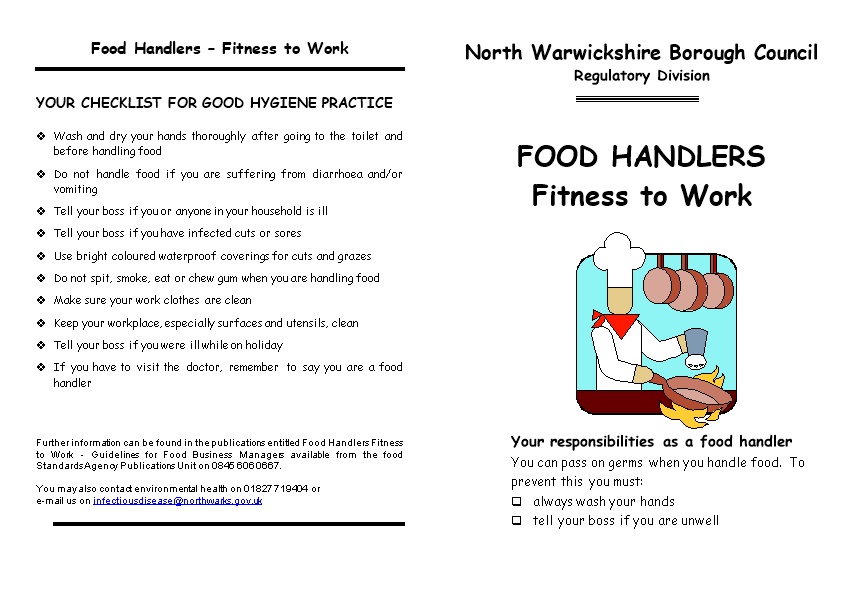
Food Safety Tips On Preparing And Consuming Food

10 principles of safe food handling and hygiene

-Presentations:
Apply standard safetyprocedures for handling foostuffs
-Vídeos:
-Projector presentation and explanation.
- Digital board
- You tube directory for watching videos and have more information.
- Personal classroom to send activities.
- Student´s book and notebooks
Activities:
SESSION 1:Activity .Brain storming and role playing about specific vocabulary.
SESSION 2: Activity 2 .INTERACTIVE EXERCISE ONLINE
SESSION 3: Activity 3.INDICATE WITH RESPECT TO EACH OF THE FOLLOWING PHOTOGRAPHS IF IT IS HYGIENICALLY CORRECT OR NOT. JUSTIFY YOUR DECISION

|
|

|
|

|
|
SESSION 4: Activity 4.Check your progress
-Differentiate between absolute and relative food safety
-Explain different types of food hazards

-List the requirements of GMP for food industry .
-Define 'Hazard' and 'Critical Control Point' .

Exercise 3.IN THE FOLLOWING TABLE INSERT THE REFRIGERATION AND FREEZING TIME FOR EACH FOOD.
KEY COMPETENCES
Specific basic competencies that will be practiced: linguistic, social, digital, cultural, learn to learn, autonomy, etc.
8.CLASS DISTRIBUTION:
Session 1:Brain storming and role playing about specific vocabulary.
Session 2:Good personal hygiene practices
– Body hygiene
– Hand washing and protection
– Hair hygiene and protection
– Work uniform
Session 3:Good personal hygiene practices
– Adoption of proper habits
– Protection from wounds or injuries
– The declaration of known diseases
Session 4: Food handling training
– The food handling training plan
– Training plan documentation
9. Evaluation (criteria and instruments)
EVALUATION CRITERIA:
-Identify health hazards, as well as the main risks and toxic infections associated with bad habits. -Recognize hygienic-sanitary standards related to hygienic and handling practices.
-Identify the agents causing the risks and their prevention measures
-Identify personal hygiene measures associated with food handling
-Recognize behaviors or skills likely to cause contamination or alteration in food.
-Identify notifiable diseases, allergies and food intolerances.
-Recognize procedures for action against food alerts
-Recognize complete work clothing and cleaning requirements.
-Identify the means of protection against cuts, burns or wounds of the manipulator.
EVALUATION INSTRUMENTS:
Continuous assessment of each student with different oral and written test, every other week. At the end of the topic, the students will take a cumulative test.
If you click here you will find the link to the unit template
Juana Simón Tamayo




Felicidades, mis mejores deseos en la enseñanza AICLE. Un cordial saludo.
ResponderEliminar